
Fluctuating workforces, the rise of hybrid working models, and the current economic climate are driving more companies than ever to explore flexible, temporary office solutions. But how exactly do temporary workspaces work? And can they truly meet the complex needs of large corporates? Read our useful guide to discover why temporary offices are becoming the go-to solution for businesses of all sizes.
A temporary workspace, often referred to as a ‘flexible workspace’, is designed to provide businesses with short-term leasing options, typically ranging from six months to a year. Unlike traditional office leases that can span over three to ten years or more, temporary workspaces offer a more adaptable and scalable solution to meet the shifting needs of modern businesses.

One of the primary benefits of temporary workspaces is their inherent flexibility. Corporates can adjust the size and type of workspace as their needs change without being locked into long-term commitments. This is particularly beneficial for companies experiencing rapid growth, undergoing restructuring, or managing project-based work that requires temporary expansion or downsizing.
Temporary workspaces can provide significant cost savings. By avoiding long-term leases and the associated overhead costs, companies can allocate their resources more efficiently. This financial flexibility is especially valuable in uncertain economic climates like we are facing now, where businesses must be agile and responsive to market conditions.
Setting up a temporary workspace is typically much faster and more convenient than securing a traditional office space. Many flexible workspace providers offer fully furnished and equipped offices, allowing businesses to move in and start operating almost immediately. This quick turnaround can be crucial for companies needing to establish a presence in new markets or accommodate sudden increases in workforce.
Temporary offices can also act as an effective stop-gap for corporates who are in between longer-term leasing buildings. For businesses transitioning from one permanent location to another, temporary workspaces provide a seamless and efficient solution to avoid downtime. This ensures continuity of operations and helps maintain productivity without the stress of being displaced or operating from less than ideal temporary arrangements.
The appeal of temporary workspaces extends beyond startups and small businesses. Today, a wide variety of organisations, from large banks to global enterprises, are leveraging these spaces to meet their operational needs. Here are a few examples:
Startups and small-to-medium enterprises (SMEs) often use temporary workspaces to avoid the financial burden of long-term leases while still accessing professional office environments.
Even large corporations are turning to flexible workspaces to manage overflow during peak periods, facilitate project-based teams, or support remote working initiatives.
For multinational companies, temporary workspaces provide a way to quickly establish a presence in new geographic markets without the long-term commitment and high costs of traditional office leases.
One common misconception is that temporary workspaces cannot be customised to meet specific business needs. In reality, many flexible workspace providers offer extensive customization options. Businesses can work with providers to design and build office layouts that include private offices, meeting rooms, collaborative spaces, and specialised areas tailored to their unique requirements.
A good flexible workspace operator will often go the extra mile to accommodate requests, such as adjusting wall placements, incorporating branding elements, and installing specific tech. This ensures that even temporary spaces can reflect a company’s culture and operational preferences.
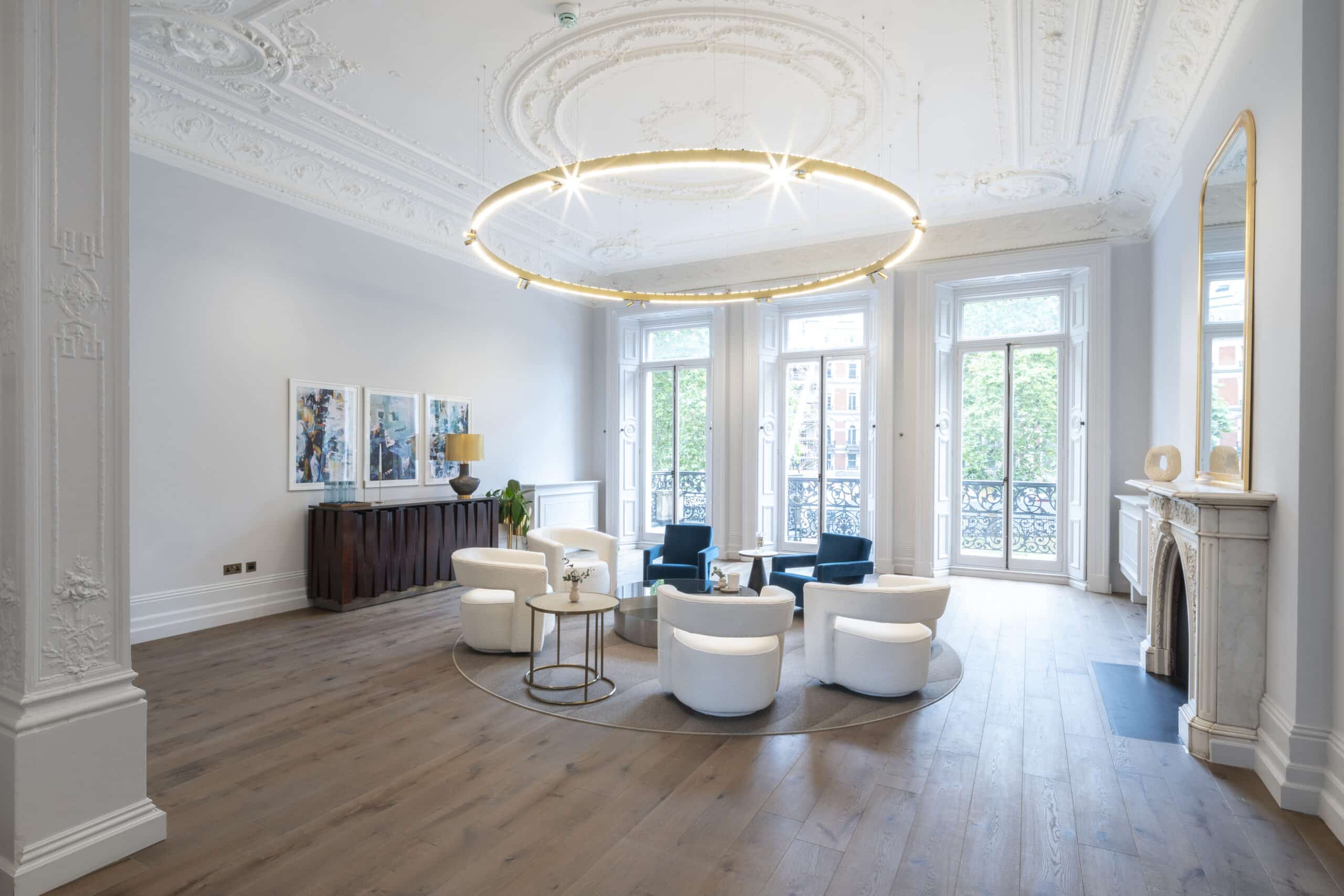
Temporary offices come in a wide range of sizes. They can accommodate anything from a two-person desk to offices for 100+ employees. Plus businesses get the benefit of being able to flex up or down depending on their requirements.
It’s clear that temporary offices provide a versatile and practical alternative to traditional office leases. Ready to find out more? WorkPad boasts an extensive portfolio of temporary workspace options across London. Speak to our helpful team today to discover how we can support your business with the perfect temporary office solution.

17 St. Anne’s Court,
London,
W1F 0BQ
If you want to find out more about a space, get in touch today through the button below.
Get in Touch


